

The types of earring backs include push or butterfly backs, screw backs, La Pousette backs, flat backs, French hooks, latch backs, hinged backs, lever backs, magnetic backs, and clip-on closures. The right choice depends on the earring style, weight, comfort, security, and how often you plan to wear it.
The types of earring backs determine how an earring stays secure, feels behind the ear, and suits its overall design. From simple push backs for everyday studs to French hooks for jhumkas and latch closures for hoops, each mechanism serves a different purpose. Once you know the difference, choosing your next pair from Discov Accessories becomes much easier, and far more intentional.
What Are Earring Backs?
An earring back is the component that helps hold an earring in place after its post or hook passes through the ear. Some backs are separate pieces that slide or screw onto a post, while others are built directly into the earring.
Although they may look like small details, earring backs can influence the overall wearing experience. A lightweight stud may work beautifully with a simple push back, while a heavier drop earring may benefit from a closure designed to provide additional support.
The best option depends on the earring itself as well as your personal preferences for security, comfort, and convenience.
10 Types of Earring Backs You Should Know
Understanding the different mechanisms makes it easier to identify what will work best for your jewellery collection.
1. Push Backs or Butterfly Backs
Push backs, often called butterfly backs, are among the most familiar earring closures. They slide onto an earring post and use a small metal mechanism to hold the earring in position.
They are popular because they are simple, quick to use, and suitable for many everyday earrings, particularly studs. Their straightforward design also makes them convenient when you frequently put earrings on and take them off.
For an easy everyday option, push backs remain a practical choice.
2. Screw Backs
Screw backs attach to the threaded portion of an earring post and are tightened by twisting the back into place. Unlike a basic push back, they require a deliberate twisting motion to secure and remove.
Their locking design makes them a popular choice when additional security is important, particularly for valuable stud earrings. The trade-off is that they generally take longer to put on or remove.
3. La Pousette Backs
La Pousette backs use a locking mechanism designed to hold the earring securely against the post. They are often associated with fine jewellery and stud earrings where security is an important consideration.
These backs can be particularly useful when you want a more secure closure without relying on a conventional screw mechanism. Their construction is more sophisticated than a standard butterfly back, making them a popular option for valuable earrings.
4. Flat Backs
Flat backs have a low-profile disc or similar surface positioned behind the ear. Their streamlined construction makes them popular for minimalist ethnic jewellery and earrings intended to feel relatively unobtrusive.
They can be a good choice when you prefer a less noticeable backing or want an earring that sits comfortably without a traditional butterfly shape behind the ear.
5. French Hooks or Fish Hooks
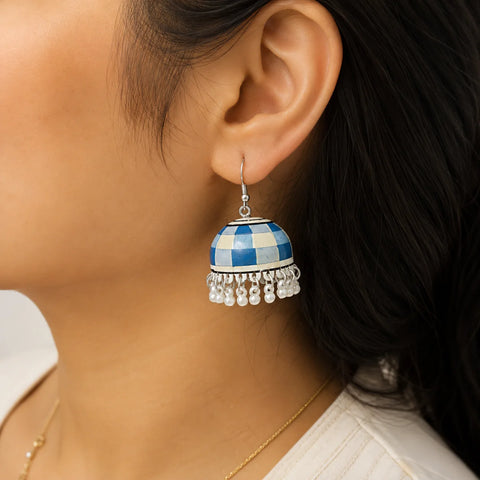
French hooks are curved wires that pass through the piercing and hang naturally from the ear. Unlike conventional post-and-back earrings, they often do not require a separate removable back.
They are especially common with drop earrings, danglers, and traditional-inspired designs such as jhumkas. Discov Accessories' Floral Meenakari Bell Jhumka, Colourful Meenakari Bell Jhumka and Floral Meenakari Beaded Jhumka are examples of styles that use French hook closures.
The hook creates a fluid look that complements earrings designed to move as you walk.
6. Latch Back Closures
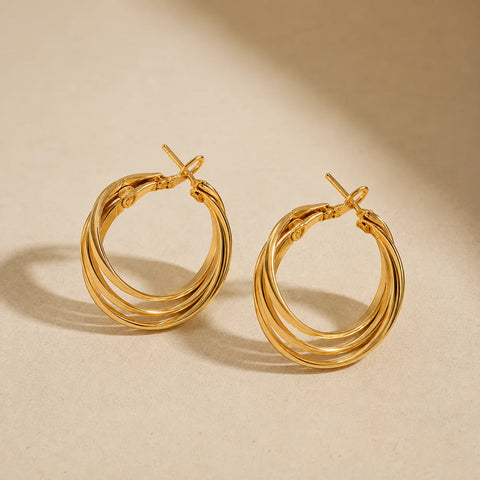
Latch backs combine a hinged mechanism with a post or hook that locks into place. They are frequently found on hoop earrings because the closure can become part of the overall design.
Their practical advantage is convenience: once the earring is positioned, the latch can close neatly and securely.
Minimalistic Twisted Hoops - Gold from Discov Accessories is an example of a hoop style with a latch-back closure, demonstrating how the mechanism can support both function and a clean aesthetic.
7. Hinged Backs
Hinged backs have a built-in hinge that allows the earring to open and close without a separate removable component. This integrated construction can make them convenient for everyday wear.
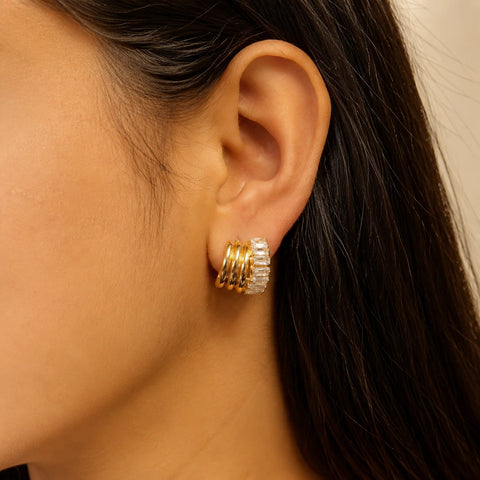
They are often used in hoops, studs, and statement designs. Floral Matte Black and Velvet Studs from Discov Accessories feature a hinged back, showing how this type of closure can work with a more distinctive earring design.
8. Lever Backs
Lever backs use a hinged lever that closes behind the ear and secures the earring in position. They are commonly associated with drop and dangle earrings because they offer a combination of convenience and stability.
The closure can also give a dangling earring a neat, finished appearance while reducing the need to handle a tiny separate backing.
9. Magnetic Backs
Magnetic closures use magnets to hold an earring in position. They can be useful in certain designs and may appeal to people who prefer a closure that is simple to handle.
However, magnetic closures work differently from conventional post-and-back mechanisms, so their suitability depends on the design and intended use of the earring.
10. Clip-On Closures
Clip-on closures are designed for people who do not have pierced ears. Instead of passing through a piercing, the earring attaches to the earlobe using a clip mechanism.
Comfort is particularly important with clip-ons because the closure sits directly against the ear. The ideal fit should feel secure without creating unnecessary pressure.
Earring Back Types at a Glance
|
Earring back |
Best suited for |
Main benefit |
|
Push/Butterfly |
Studs and everyday earrings |
Simple and convenient |
|
Screw Back |
Valuable studs |
Additional security |
|
La Pousette |
Fine stud earrings |
Locking mechanism |
|
Flat Back |
Minimal styles |
Low-profile feel |
|
French Hook |
Drops and jhumkas |
Easy, fluid design |
|
Latch Back |
Hoops |
Convenient closure |
|
Hinged Back |
Hoops and statement styles |
Integrated mechanism |
|
Lever Back |
Drop earrings |
Secure and easy to handle |
|
Magnetic Back |
Select styles |
Easy handling |
|
Clip-On |
Unpierced ears |
No piercing required |
Which Earring Back Is Best for Different Earring Styles?
There is no single best closure for every earring. The design, weight, and way the earring hangs should guide your choice.
Best Backs for Stud Earrings
Push backs are a familiar everyday choice for studs, while screw and La Pousette backs can be considered when additional security is a priority. Flat backs are another option when you prefer a more streamlined feel behind the ear.
Best Backs for Hoop Earrings
Girls Hoop earrings commonly use latch or hinged closures. These mechanisms allow the hoop to open, pass through the piercing, and close neatly, creating a clean finish without a separate backing that can be misplaced.
Best Backs for Drop Earrings
French hooks and lever backs are particularly suited to drop and dangle styles. They allow the earring to move naturally while keeping the closure integrated into the overall design.
Best Backs for Jhumkas
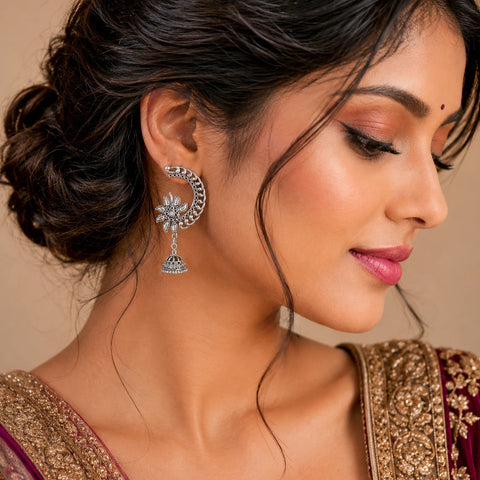
French hooks are frequently paired with jhumkas because the curved hook complements the traditional silhouette and allows the decorative portion of the earring to hang freely. When selecting a jhumka, consider both the closure and the overall weight of the design.
Best Backs for Heavier Earrings
For heavier earrings, the closure should be considered alongside the earring's construction and weight distribution. A supportive backing can help the earring sit more comfortably and securely, but the backing alone does not determine how an earring feels.
Which Type of Earring Back Is the Most Secure?
Among the types of earring backs, screw backs and locking styles such as La Pousette backs are often chosen when additional security is a priority. However, security also depends on the quality of the mechanism, the earring's weight, and whether the closure is fitted correctly.
For hoops and similar designs, a properly functioning latch or hinged closure can provide a secure everyday option.
Rather than choosing a closure simply because it is labelled “secure,” consider how it works with the specific earring you intend to wear.
Which Earring Back Is Most Comfortable for Everyday Wear?
Comfort depends on more than the backing itself. The earring's weight, shape, post length, and how long you wear it all matter.
For lightweight everyday studs, a simple push or flat back may be convenient. For small hoop earrings, an integrated hinged or latch mechanism can reduce the number of separate components you need to handle. With drop earrings, French hooks or lever backs can complement the movement of the design.
If an earring feels uncomfortable, changing the backing may help, but the overall construction and weight should also be considered.
How to Choose the Right Earring Back
When comparing types of earring backs, consider these five factors before making your choice.
Consider the Earring Weight
Lightweight earrings offer more flexibility, while heavier designs need a closure that works well with their construction and balance.
Consider the Earring Style
Studs, hoops, drops, and jhumkas naturally lend themselves to different closure mechanisms. Start with the earring style rather than choosing a backing in isolation.
Think About Security
If you wear valuable earrings regularly, you may prefer a locking or screw-based option. For casual styles, convenience may be equally important.
Prioritise Comfort
Consider how long you typically wear your earrings. A closure that feels comfortable for a few hours may not be your preference for an all-day occasion.
Think About Ease of Use
If you change earrings frequently, a simple push or integrated hinged closure can be convenient. If security is your primary consideration, you may prefer a mechanism that takes an extra moment to fasten.
Also, explore Indian traditional jewellery for timeless styles and designs.
Earring Back vs Earring Closure: What's the Difference?
The terms “earring back” and “earring closure” are sometimes used interchangeably, but they can describe slightly different things.
An earring back usually refers to the component securing an earring post behind the ear, such as a butterfly or screw back. Earring closure is a broader term that can include hooks, latches, hinges, and other mechanisms that secure an earring.
This distinction is useful when shopping because not every earring has a separate back. Some designs have the closure built directly into the earring.
Explore, how to make an earring box to store and protect your jewellery.
Common Mistakes to Avoid When Choosing an Earring Back
One common mistake is assuming that every closure works equally well with every earring. The earring's shape, weight, and construction should always be considered.
Another is choosing security at the expense of convenience. A closure may be highly secure but less practical if you find it difficult to fasten every morning.
It is also worth checking the mechanism before wearing an earring outside the home. A properly functioning closure should open and close as intended without excessive force.
Ultimately, the right choice is the one that balances security, comfort, style, and ease of use.
Find Your Next Pair at Discov Accessories
Knowing the types of earring backs makes it easier to look beyond appearance and choose western jewellery that suits the way you actually wear it. Whether you prefer the everyday simplicity of studs, the movement of jhumkas, or the clean silhouette of hoops, the closure is an important part of the experience.
Explore Discov Accessories and discover pieces such as Floral Meenakari Bell Jhumka, Floral Meenakari Beaded Jhumka, Minimalistic Twisted Hoops - Gold, and Floral Matte Black and Velvet Studs. Find an earring style that feels right for your wardrobe, your occasions, and your way of wearing jewellery.
Frequently Asked Questions
Q1. What are the different types of earring backs?
The most common types include push or butterfly backs, screw backs, La Pousette backs, flat backs, French hooks, latch backs, hinged backs, lever backs, magnetic closures, and clip-ons. Each is suited to different earring styles and wearing preferences.
Q2. How do I choose the right earring back?
Choose according to the earring's style, weight, security requirements, and how often you plan to wear it. Studs may suit push or screw backs, while hoops often use latch or hinged closures.
Q3. Can earring backs be changed?
Yes, many earrings with removable posts can use compatible replacement backs. Before changing one, check that the replacement fits the post securely and is appropriate for the earring's design and weight.
Q4. Is a screw back more secure than a push back?
A screw back can provide additional security because it attaches by threading onto the post. However, the actual security depends on the quality and condition of the closure and how correctly it is fitted.
Q5. Will flat backs be comfortable for everyday earrings?
Flat backs can be comfortable for everyday wear because their low-profile design sits relatively close to the ear. Comfort still depends on the earring's overall weight, shape, post, and individual preference.
Q6. What is the best earring back for heavy earrings?
There is no universal answer, but heavier earrings generally benefit from a closure and overall construction designed to support their weight. Consider the backing together with the earring's balance, size, and how long you plan to wear it.
Q7. Why do some earrings have hooks instead of backs?
Hooks can provide an integrated way to secure drop earrings, jhumkas, and similar designs without requiring a separate removable back. French hooks are especially common because they complement the movement and silhouette of dangling earrings.
Q8. Why are latch and hinged backs popular for hoops?
Latch and hinged backs are convenient because the closure is integrated into the hoop. They allow the earring to open and close easily while maintaining a clean appearance, making them particularly practical for everyday hoop styles.