

A handbag size guide helps you choose a bag according to what you carry, where you use it, and how much space you need. Mini bags suit essentials, small bags work for light everyday carry, medium bags offer more room, and totes provide the greatest capacity for work, shopping, travel, and daily use.
Choosing a handbag size starts with what you actually need to carry. A mini works for phone-and-card essentials, while a medium or tote makes more sense when your day requires more. At Discov Accessories, our range covers compact slings, handbags and spacious totes, so the right size can also fit naturally into your routine.
Handbag Size Guide: Mini, Small, Medium and Tote at a Glance
There is no single universal measurement that defines every mini, small, medium or large handbag. Shapes, depth, compartments and construction can change how much a bag holds.
That is why actual dimensions are more useful than the label alone.
|
Bag Category |
Discov Example |
Actual Dimensions |
Best Suited For |
Typical Contents |
|
Mini / Compact |
Olive Petal Crochet Bag |
19 × 20 cm |
Light everyday carry |
Phone, cards, keys, small essentials |
|
Small |
Macramé Brown N Yellow Sling Bag |
24 × 20 cm |
Casual outings |
Phone, wallet, keys and personal essentials |
|
Small–Medium |
Tan Hexagonal Crossbody Bag |
27 × 7 × 22 cm |
Compact everyday use |
Phone, wallet, keys and small accessories |
|
Medium |
Tan Bucket Bag |
30 × 11 × 25 cm |
Work, everyday use, travel |
Daily essentials and additional belongings |
|
Tote |
Sunshine Frill Tote Bag |
46 × 38 cm |
Larger everyday carry |
Daily essentials, notebooks and other larger items |
These categories are practical guideposts rather than fixed industry standards. Before buying a bag, compare its listed measurements with the largest items you normally carry.
What Do Handbag Dimensions Mean?
Understanding bag dimensions makes online shopping much easier.
Most product measurements use some combination of:
-
Length: The horizontal measurement across the bag.
-
Height: The vertical measurement from the base towards the top.
-
Width or depth: The amount of space available from front to back.
-
Strap length: The length of the handle or shoulder/crossbody strap.
A bag measuring 30 × 11 × 25 cm gives you more information than simply calling it a “medium handbag.” The 11 cm depth, for example, affects how much can sit inside the bag without forcing it to bulge.
Strap design matters too. An adjustable strap gives you more flexibility in how the bag sits on the body, while a shorter handle creates a different carrying position.
Mini Handbags: What Fits?
A mini handbag is designed around the essentials rather than maximum capacity. It is useful when you want to carry only what you need and avoid the bulk of a larger bag.
A practical mini-bag loadout can include:
-
Smartphone
-
Card holder
-
Keys
-
Lip balm or lipstick
-
Earbuds
-
A few small personal items
The Olive Petal Crochet Bag is a compact Discov example, measuring 19 × 20 cm. It weighs 288 g, has one compartment and a 58 cm strap. Its cotton-yarn construction and lightweight format make it suited to relaxed everyday styling.
The important point is not to judge a mini bag by appearance alone. Check the dimensions of your phone, wallet and other essentials first. A compact bag can work beautifully when your daily carry is minimal, but it may feel restrictive if you regularly carry sunglasses, cosmetics, notebooks or larger accessories.
Small Handbags: More Room Without the Bulk
A small handbag sits between a compact mini and a more spacious everyday bag. It is a practical option for people who want a little more room without carrying a large silhouette.
A small handbag can typically accommodate:
-
Smartphone
-
Wallet or card holder
-
Keys
-
Sunglasses
-
Compact
-
Lip products
-
Earbuds
-
Other small essentials
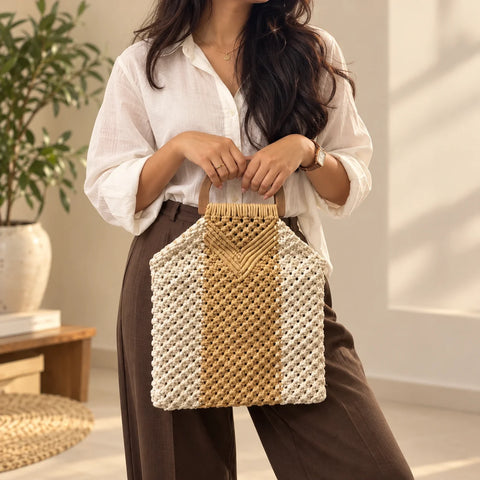
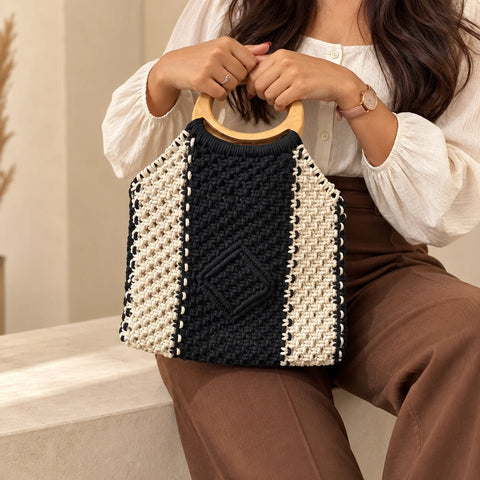
The Macramé Brown N Yellow Sling Bag measures 24 × 20 cm and has one compartment with an adjustable strap. Its macramé construction gives it a relaxed, textured character, making it especially suited to casual outfits and everyday outings.
A small crossbody or sling can also be useful when you want your hands free while shopping, meeting friends or moving around the city.
Medium Handbags: The Everyday Sweet Spot
For many people, a medium handbag offers the most practical balance between capacity and portability.
A medium bag can accommodate the essentials while leaving room for a few extras. Depending on its shape and depth, you may carry:
-
Smartphone
-
Wallet
-
Keys
-
Sunglasses
-
Cosmetics
-
Small notebook
-
Earbuds
-
Other daily necessities
The Tan Bucket Bag measures 30 × 11 × 25 cm. It has one main compartment and one smaller compartment, along with an adjustable strap. Its structured shape makes it suitable for work, travel and casual use.
When choosing a medium handbag, pay attention to depth as much as length and height. A tall, narrow bag and a shorter, deeper bag can have very different usable capacities even when their overall dimensions appear similar.
Tote Bags: When You Need More Space
A tote is the natural choice when your day involves more belongings.
Tote bags are useful for:
-
Work essentials
-
Notebooks
-
Documents
-
Cosmetics
-
Shopping items
-
Larger personal belongings
-
Travel-day necessities
The Sunshine Frill Tote Bag measures 46 × 38 cm and weighs 429 g. It has one compartment, a 26 cm strap and a cotton-cloth construction. Its larger dimensions make it a practical example of a spacious tote designed for day-to-day use.
However, larger does not automatically mean better. A tote can become inconvenient if you usually carry very little. Choose the capacity that matches your routine rather than buying the largest bag simply because it offers more space.
Which Handbag Size Should You Choose?
The easiest way to choose the right size is to start with your everyday belongings.
Choose a mini if:
-
You carry only your phone, cards and keys.
-
You prefer lightweight accessories.
-
You want a compact option for evenings or quick outings.
-
You do not need space for larger personal items.
Choose a small bag if:
-
You want room for basic daily essentials.
-
You prefer a crossbody or sling format.
-
You regularly move between cafés, shopping trips and casual outings.
-
You want hands-free convenience.
Choose a medium handbag if:
-
You carry several essentials every day.
-
You need additional space for cosmetics or sunglasses.
-
You want one versatile bag for different occasions.
-
You need more organisation without a large tote.
Choose a tote if:
-
You carry notebooks, documents or multiple belongings.
-
You need more room for work or shopping.
-
You prefer a spacious, open format.
-
You want one bag that can handle a fuller daily load.
Best Handbag Size for Everyday Use
The best handbag size for everyday use depends on your personal carry list, not simply on fashion trends.
If your daily essentials fit into a compact space, a small sling can be more comfortable and convenient than a large handbag. If you carry several items throughout the day, a medium bag offers more flexibility. For work, shopping or days when you need additional belongings, a tote can provide the extra capacity you need.
Your routine should determine your bag size.
Handbag Size for Work, Travel and Casual Outings
Different occasions call for different amounts of storage.
-
For work: Choose a medium or larger bag if you regularly carry notebooks, documents or other work essentials. Check the actual dimensions of your belongings before assuming a bag will fit them.
-
For travel: A compact crossbody works well for easily accessible essentials, while a larger tote can accommodate additional belongings during a day out.
-
For shopping and casual outings: Small sling bags provide hands-free convenience, while medium handbags offer more flexibility.
-
For evening plans: A mini or compact handbag keeps the focus on the essentials without adding unnecessary bulk.
Discov Accessories offers sling bags, handbags, tote bags, vegan leather designs, crochet bags and macramé styles across different occasions, giving you room to choose based on both function and personal style. Learn what is a tote bag to understand its key features, popular styles, and versatility for everyday use, work, shopping, and travel.
How to Choose the Right Handbag Size
A useful buying decision starts with five questions:
-
What do I carry every day? Make a list instead of guessing.
-
What is my largest everyday item? Measure your notebook, tablet, sunglasses case or other larger belongings.
-
Do I need compartments? A bag with dedicated smaller compartments can make everyday organisation easier.
-
How will I carry it? Consider shoulder, crossbody, handle and adjustable-strap options.
-
Will I overfill it? Avoid choosing a smaller bag if you already know you tend to carry more than its dimensions allow.
Weight also matters. The Olive Petal Crochet Bag weighs 288 g, the Macramé Brown N Yellow Sling Bag weighs 300 g, the Tan Bucket Bag weighs 406 g, and the Sunshine Frill Tote Bag weighs 429 g. A bag's weight becomes especially relevant when you already carry several personal belongings.
Handbag Size vs Capacity: Why Dimensions Matter
Two handbags can have similar heights but hold very different amounts.
Capacity depends on more than length and height. Consider:
-
Depth
-
Shape
-
Number of compartments
-
Closure style
-
Internal construction
-
Strap and handle design
-
How rigid or flexible the material is
The Tan Hexagonal Crossbody Bag, for example, measures 27 × 7 × 22 cm and includes one main compartment plus two smaller compartments. Its 7 cm depth gives it a very different internal profile from a flat bag with similar height and length.
This is why a handbag size guide should help you compare actual measurements rather than treating every “small” or “medium” bag as identical.
Discov Accessories Handbag Size Comparison
If you are comparing several styles, use the measurements as your starting point.
|
Discov Bag |
Dimensions |
Weight |
Format |
Useful For |
|
Olive Petal Crochet Bag |
19 × 20 cm |
288 g |
Shoulder bag |
Light everyday carry |
|
Macramé Brown N Yellow Sling Bag |
24 × 20 cm |
300 g |
Sling bag |
Casual everyday use |
|
Tan Hexagonal Crossbody Bag |
27 × 7 × 22 cm |
453 g |
Crossbody |
Compact organised carry |
|
Tan Bucket Bag |
30 × 11 × 25 cm |
406 g |
Shoulder bag |
Work, travel and everyday use |
|
Sunshine Frill Tote Bag |
46 × 38 cm |
429 g |
Tote bag |
Spacious day-to-day carry |
Use these dimensions as a practical comparison rather than assuming that one size category works for everyone.
Explore Bags by Size and Style
Once you know the capacity you need, the next decision is the silhouette that suits your wardrobe.
Discov Accessories offers sling bags, handbags, tote bags, vegan leather bags, crochet bags and macramé bags, covering different carrying preferences and occasions.
You can explore the full collection of bags from Discov Accessories and compare styles according to the space, structure and aesthetic you prefer.
Find Your Everyday Bag at Discov Accessories
The right handbag is the one that works with your real routine. Once you know how much you carry, compare the actual dimensions, choose the capacity that makes sense, and then select the style that feels right for your wardrobe.
From compact sling bags and textured crochet designs to structured handbags and spacious totes, Discov Accessories offers options for different days, occasions, and ways of carrying.
Explore the Discov Accessories bag collection and find a handbag that fits your essentials, your routine, and your style.
Frequently Asked Questions
Q1. How do I choose the right handbag size?
Start by listing what you carry every day, identify your largest item, and compare those measurements with the bag's length, height and depth. Your usual routine should determine the size.
Q2. Can a mini handbag be used every day?
Yes, if your daily essentials are limited to items such as a phone, cards, keys and a few small personal belongings. A mini bag becomes less practical when you regularly carry larger items.
Q3. Is a medium handbag good for everyday use?
Yes. A medium handbag generally offers a useful balance between capacity and portability, making it suitable for people who carry several daily essentials.
Q4. Will a tote bag hold more than a medium handbag?
Generally, yes. Totes are designed around greater capacity, but the actual amount they hold depends on their dimensions, depth, construction and compartments.
Q5. What size handbag is best for work?
A medium or larger handbag is usually more practical when you carry work-related belongings. Always check the actual dimensions of your laptop, notebook or documents before choosing a bag.
Q6. Why do handbag dimensions matter?
Dimensions show you how much physical space a bag provides. Length, height and depth can affect capacity, while compartments and shape influence how efficiently that space can be used.
Q7. What can I fit in a small handbag?
A small handbag can usually accommodate everyday essentials such as a smartphone, wallet or card holder, keys, sunglasses and small cosmetics, depending on its exact dimensions.
Q8. How are handbag sizes measured?
Handbag dimensions are generally given using length, height and, where relevant, width or depth. Product specifications may also include strap length, weight and compartment details.